









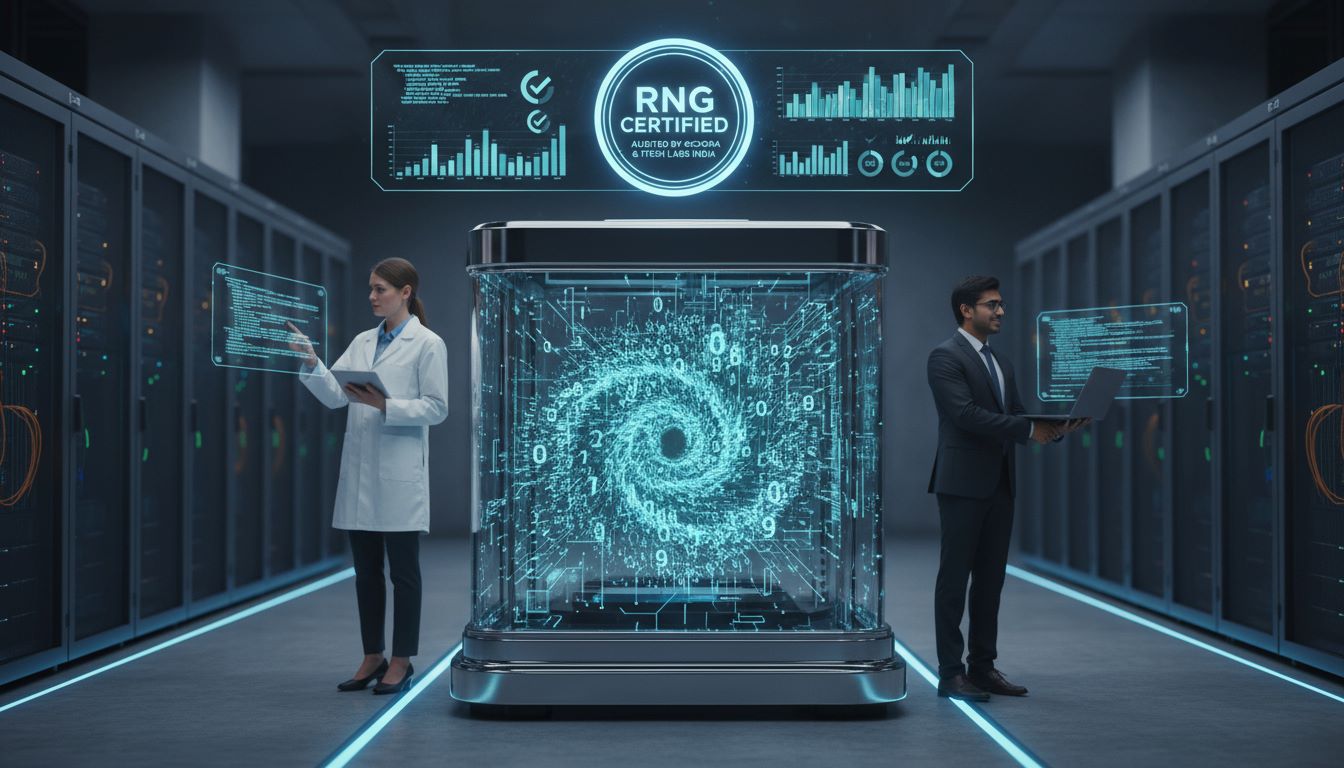
Random number generator audits serve as the cornerstone of fair gaming practices in India’s evolving casino industry. These comprehensive evaluations ensure that slot machines operate with genuine randomness, protecting both players and operators from potential manipulation or bias. As India’s gaming landscape continues to mature, RNG certification has become essential for maintaining regulatory compliance and building consumer confidence.
The importance of slot RNG audits extends beyond mere technical verification, positioning these assessments as fundamental trust-building mechanisms between casinos and their patrons. With state-level gaming regulations becoming increasingly sophisticated, operators must demonstrate their commitment to fairness through rigorous third-party testing and transparent reporting of their random number generation systems.
What Is a Slot RNG & Why Is It Audited?
A Random Number Generator (RNG) forms the mathematical heart of every slot machine, producing the unpredictable sequences that determine game outcomes. These sophisticated algorithms or hardware devices generate millions of random numbers per second, ensuring that each spin remains independent of previous results. The complexity of modern RNG systems requires specialized expertise to verify their integrity and compliance with gaming standards.
Auditing becomes essential because the fairness of casino games depends entirely on the quality of randomness generated by these systems. Without proper verification, players cannot trust that outcomes are truly random, and regulators cannot ensure that operators comply with statutory requirements. Independent testing laboratories use advanced statistical methods to analyze RNG performance, examining everything from distribution patterns to seed generation processes.
The audit process also serves to protect casino operators from accusations of unfair play while providing regulatory bodies with confidence in their oversight capabilities. Modern RNG audits examine both the mathematical algorithms and their implementation, ensuring that theoretical randomness translates into practical fairness during actual gameplay.
Beyond technical verification, RNG audits contribute to the broader ecosystem of responsible gaming by establishing industry-wide standards for transparency and accountability. These assessments create a framework where innovation can flourish while maintaining the fundamental principle that games of chance must remain genuinely random and fair to all participants.
Types of RNG Used in Indian Gaming
| RNG Type | Function | Reliability | Examples in India |
|---|---|---|---|
| Software RNG | Algorithmic pseudo-random generation | High with proper seeding | Goa casino slots, online platforms |
| Hardware RNG | Physical entropy-based generation | Very high, true randomness | Sikkim land-based casinos |
| Quantum RNG | Quantum mechanics-based randomness | Highest theoretical security | Emerging in premium venues |
Software RNGs dominate the Indian gaming market due to their cost-effectiveness and ease of implementation across different platforms. Hardware-based systems are gaining traction in established venues where maximum security is paramount, while quantum RNG technology represents the cutting edge of randomness generation for future applications.
Key Principles of RNG Fairness
- Unpredictability ensures that no player or operator can anticipate future outcomes based on previous results or system knowledge
- Statistical uniformity guarantees that all possible outcomes occur with their mathematically expected frequency over extended periods
- Independence verification confirms that each generated number remains completely uninfluenced by preceding values or external factors
- Reproducibility allows auditors to verify system behavior under controlled conditions while maintaining operational randomness
- Algorithm transparency enables regulatory review without compromising the security of the random generation process
Indian Regulatory Framework for RNG Certification
| Authority/Body | Jurisdiction | Role in Auditing |
|---|---|---|
| Goa Gaming Commission | Goa State | Mandates RNG certification for all gaming equipment |
| Sikkim Gaming Department | Sikkim State | Oversees RNG testing and compliance verification |
| Ministry of Electronics & IT | Federal Level | Sets cybersecurity standards for RNG systems |
| Reserve Bank of India | National Banking | Regulates payment systems connected to certified gaming platforms |
India’s regulatory framework for RNG certification operates primarily at the state level, with each gaming jurisdiction establishing specific requirements for random number generator testing and validation. The Goa Gaming Commission has developed comprehensive guidelines that require all slot machines to undergo independent RNG audits before deployment, while Sikkim’s approach emphasizes ongoing monitoring and periodic recertification.
Federal oversight focuses on broader cybersecurity and financial compliance aspects, with the Ministry of Electronics and Information Technology providing guidelines for secure implementation of RNG systems. This multi-layered approach ensures that technical standards align with both gaming regulations and national security requirements.
How State Rules Differ
State-wise variations in RNG audit requirements reflect the diverse approaches to gaming regulation across India’s federal structure. Goa emphasizes comprehensive pre-deployment testing with annual recertification, while Sikkim requires more frequent monitoring but allows for streamlined renewal processes for established operators. These differences create challenges for multi-state operators who must navigate varying compliance requirements.
Enforcement mechanisms also differ significantly between states, with some jurisdictions relying on self-reporting by operators while others maintain dedicated technical teams for ongoing verification. The trend toward harmonization of standards continues to evolve as regulatory bodies share best practices and collaborate on common technical requirements.
The Slot RNG Audit & Certification Process
- Initial laboratory selection involves choosing an accredited testing facility with expertise in gaming technology and recognition by relevant regulatory authorities
- Code submission requires providing complete RNG source code, implementation documentation, and system architecture details to the certification laboratory
- Static analysis examines the mathematical algorithms, seed generation methods, and entropy sources without running the actual system
- Dynamic testing utilizes industry-standard test suites including Diehard tests and NIST Statistical Test Suite to evaluate randomness quality
- Live system verification involves testing the RNG implementation within actual gaming hardware under operational conditions
- Documentation review ensures all technical specifications, operating procedures, and maintenance protocols meet regulatory requirements
- Final certification issuance provides official approval with validity periods and renewal requirements specified by the testing laboratory
The certification process typically spans several months, depending on the complexity of the RNG system and the thoroughness of the testing laboratory’s evaluation. Operators must budget for both initial certification costs and ongoing compliance expenses, including periodic re-testing and system updates.
Success in the audit process requires careful preparation, with operators benefiting from early engagement with certification laboratories to understand specific testing requirements and documentation standards. Many operators choose to conduct preliminary internal testing to identify potential issues before formal submission.
The evolving nature of RNG technology means that certification processes continue to adapt to new developments in quantum computing, artificial intelligence, and cybersecurity threats. Laboratories regularly update their testing methodologies to address emerging challenges in randomness verification.
Certification timelines can be significantly impacted by the quality of initial submissions, with incomplete or poorly documented systems requiring multiple revision cycles. Operators who invest in thorough preparation and professional documentation typically experience smoother and faster certification processes.
Major International Certification Agencies in India
| Agency | Scope | Reputation | Presence in India |
|---|---|---|---|
| Gaming Laboratories International (GLI) | Comprehensive gaming testing | Industry gold standard | Active in Goa and Sikkim |
| eCOGRA | Online gaming certification | Trusted by major operators | Growing online platform adoption |
| iTech Labs | RNG and game testing | ISO 17025 accredited | Emerging market presence |
| BMM Testlabs | Technical compliance testing | Established global presence | Limited but growing |
Gaming Laboratories International maintains the strongest presence in the Indian market, with established relationships with major casino operators in both Goa and Sikkim. Their comprehensive testing capabilities and regulatory recognition make them the preferred choice for complex certification requirements. eCOGRA has gained significant traction in the online gaming segment, where their specialized expertise in internet-based platforms provides particular value.
The competitive landscape among certification agencies benefits Indian operators through improved service quality and competitive pricing. However, choosing the right laboratory requires careful consideration of regulatory acceptance, technical capabilities, and timeline requirements specific to each jurisdiction.
Common Audit Pitfalls for Casino Operators
- Inadequate documentation preparation leads to delays and additional costs when certification laboratories cannot properly evaluate system specifications
- Poor change control procedures result in audit failures when modifications to RNG systems occur without proper approval and testing
- Insufficient internal testing before submission causes multiple revision cycles and extended certification timelines
- Misalignment between regulatory requirements and chosen certification standards creates compliance gaps that must be addressed post-audit
- Inadequate staff training on certified systems leads to operational issues that can invalidate certifications during routine inspections
Testing Protocols: Methods & Standards
Modern RNG testing protocols employ sophisticated statistical methods to evaluate the quality of randomness generated by gaming systems. The Diehard test suite, developed by George Marsaglia, remains one of the most rigorous evaluation frameworks, subjecting RNG output to multiple statistical analyses that detect patterns, correlations, and other deviations from true randomness. These tests examine everything from bit sequences to complex mathematical relationships within the generated numbers.
The NIST Statistical Test Suite provides another cornerstone of RNG evaluation, offering fifteen different tests that assess various aspects of randomness including frequency analysis, runs testing, and spectral analysis. Chi-square tests complement these evaluations by examining the distribution of outcomes across different probability ranges, ensuring that rare events occur with appropriate frequency over extended testing periods.
Entropy analysis has become increasingly important as RNG systems grow more sophisticated, with modern testing protocols examining not just the final output but also the quality of the underlying entropy sources. This comprehensive approach helps identify potential vulnerabilities in seed generation, environmental influences, and system interactions that could compromise randomness quality.
Advanced testing methodologies now incorporate machine learning techniques to detect subtle patterns that traditional statistical methods might miss. These evolving protocols reflect the ongoing arms race between RNG developers seeking to create truly random systems and testing laboratories working to identify any possible weaknesses or predictabilities in their output.
Comparing Classic vs Quantum RNG Testing
| Testing Standard | Typical Use | Randomness Quality |
|---|---|---|
| Classical Statistical Testing | Software and hardware RNGs | Pseudo-random validation |
| Quantum Testing Protocols | Quantum RNG systems | True randomness certification |
| Hybrid Verification Methods | Multi-source RNG systems | Maximum security assurance |
Transparency, Seals, and Player Assurance
- Certification seals provide immediate visual confirmation that slot games have undergone independent RNG testing by accredited laboratories
- Public reporting requirements ensure that audit results and compliance status remain accessible to players and regulatory authorities
- Real-time monitoring systems allow continuous verification of RNG performance without disrupting normal gaming operations
- Player education initiatives help gamblers understand the significance of RNG certification and how to identify properly tested games
- Transparency reports detail the specific testing methodologies, statistical results, and ongoing compliance measures for each certified system
- Independent oversight mechanisms provide additional layers of verification through third-party monitoring and surprise inspections
The effectiveness of transparency measures depends largely on their accessibility and understandability to average players, who may lack technical knowledge about RNG systems but need confidence in game fairness. Leading operators invest in clear communication strategies that translate complex technical certifications into meaningful assurances for their customers.
Regulatory bodies increasingly require not just initial certification but ongoing transparency about RNG performance, creating systems where players can access current information about the games they choose to play. This evolution toward continuous disclosure reflects growing consumer awareness and demand for accountability in gaming operations.
Audit Seals: What Players Should Look For
| Seal | Issuing Lab | Validity Period |
|---|---|---|
| GLI Certified | Gaming Laboratories International | 12-24 months |
| eCOGRA Safe & Fair | eCOGRA Testing | 12 months |
| iTech Labs Certified | iTech Labs Australia | 24 months |
| BMM Compliant | BMM Testlabs | 18 months |
Players should verify that certification seals are current and clickable, leading to detailed reports or verification pages on the testing laboratory’s website. Legitimate seals typically include certification numbers, issue dates, and expiration periods that allow for independent verification of their authenticity.
Player Checklist for Fair Slot Play
- Verify the presence of current certification seals from recognized testing laboratories before beginning play
- Check that the casino holds valid licenses from appropriate gaming authorities in Goa, Sikkim, or other regulated jurisdictions
- Look for published RTP percentages and ensure they align with independent audit results
- Confirm that the gaming platform provides clear information about its RNG testing and certification status
- Research the reputation of both the casino operator and the certification laboratories they employ
- Ensure that customer support can provide detailed information about RNG certification and testing procedures
Innovation and the Future of Slot RNG in India
The future of slot RNG technology in India points toward quantum random number generation systems that promise unprecedented levels of security and true randomness. Indian research institutions are collaborating with gaming technology companies to develop quantum RNG solutions specifically tailored to the subcontinent’s regulatory environment and technical infrastructure. These systems leverage quantum mechanical phenomena to generate randomness that is theoretically impossible to predict or replicate.
Artificial intelligence integration represents another frontier in RNG innovation, with AI systems potentially serving both to enhance randomness quality and to detect any deviations from expected statistical behavior. Machine learning algorithms could provide continuous monitoring of RNG performance, identifying subtle patterns or anomalies that human auditors might miss during traditional certification processes.
Cybersecurity considerations are driving the development of more sophisticated RNG protection mechanisms, as gaming systems face increasing threats from advanced persistent threats and quantum computing attacks. Future Indian gaming regulations may require quantum-resistant encryption and authentication systems to protect the integrity of RNG operations from both current and emerging security challenges.
Quantum RNG in Indian Slot Audits
Quantum RNG technology is beginning to appear in premium gaming venues across India, requiring new audit protocols that can verify the quantum mechanical properties of these advanced systems. Unlike traditional RNG audits that focus on statistical analysis of outputs, quantum RNG certification must also examine the underlying physical processes and quantum state measurements that generate the random numbers.
The certification process for quantum RNGs involves specialized equipment and expertise that few testing laboratories currently possess, creating both opportunities and challenges for the Indian gaming industry. As this technology matures, it may become the new standard for high-stakes gaming applications where maximum security and true randomness are essential for maintaining player confidence and regulatory compliance.